

A minister resigns. The internet erupts in celebration. And then, within days, the people doing the celebrating start getting knocks on the door. That is roughly the arc playing out across India right now, where the exit of former Union Education Minister Dharmendra Pradhan has set off a strange tug-of-war between exuberant young critics online and a state apparatus that seems increasingly allergic to mockery.
The Reel That Turned Into a Police Case
It started, as these things so often do now, with a video. A social media influencer in Madhya Pradesh was booked after posting what authorities described as an “abusive” reel targeting Pradhan, according to reporting from the Free Press Journal, the Tribune India and the Daily Pioneer. The near-simultaneous coverage across three separate outlets is itself telling: this wasn’t a fringe story quietly filed away, it was treated as a genuine flashpoint. Meanwhile, in Nigeria’s Daily Post, a separate dispatch captured the mood driving these posts in the first place — Indian youths, the outlet reported, were celebrating the minister’s exit and demanding further reforms, not just a single scalp.
That gap between celebration and consequence is the story. A generation raised on memes and reels is treating a minister’s departure as a small, satisfying victory. The state, or at least parts of it, is treating the mockery that came with that victory as a punishable offense.
It’s Not Just One Influencer
The Madhya Pradesh case didn’t happen in isolation. Delhi Police, according to Oneindia and Rediff, moved to crack down on posts criticizing Prime Minister Narendra Modi after a recent wave of protests wound down. The pattern is consistent even if the targets differ: online criticism of a sitting minister, a chief minister, or the prime minister is increasingly being met not with a rebuttal or a press statement, but with a First Information Report.
For a country with hundreds of millions of social media users and a political culture that has always run hot on Twitter and now runs even hotter on short-form video, this raises an obvious question — where exactly is the line between insult and dissent, and who gets to draw it? Indian law has long included provisions against defamation and posts deemed to incite public disorder, but critics have repeatedly argued that “abusive” is a dangerously elastic word when it’s the government itself deciding what counts.
Two Very Different Responses From the Establishment
What makes this moment particularly interesting is that India’s political and cultural establishment isn’t speaking with one voice. RSS chief Mohan Bhagwat, according to the Times of India, offered a strikingly measured take, saying youth have always questioned authority — a line that reads almost like an elder statesman shrugging off generational friction as nothing new.
Contrast that with Uttar Pradesh Chief Minister Yogi Adityanath, who, per Hindustan Times and Jagran Josh, urged teachers to play a frontline role in protecting students from social media misinformation. On its face, that’s an uncontroversial ask — nobody wants kids swallowing fake news whole. But delivered in the same news cycle as police cases against influencers for mocking ministers, it lands differently. It suggests an establishment trying to have it both ways: acknowledging that young people’s skepticism of authority is natural and even healthy, while simultaneously working to control the platforms and channels through which that skepticism gets expressed.
Why This Keeps Happening in India
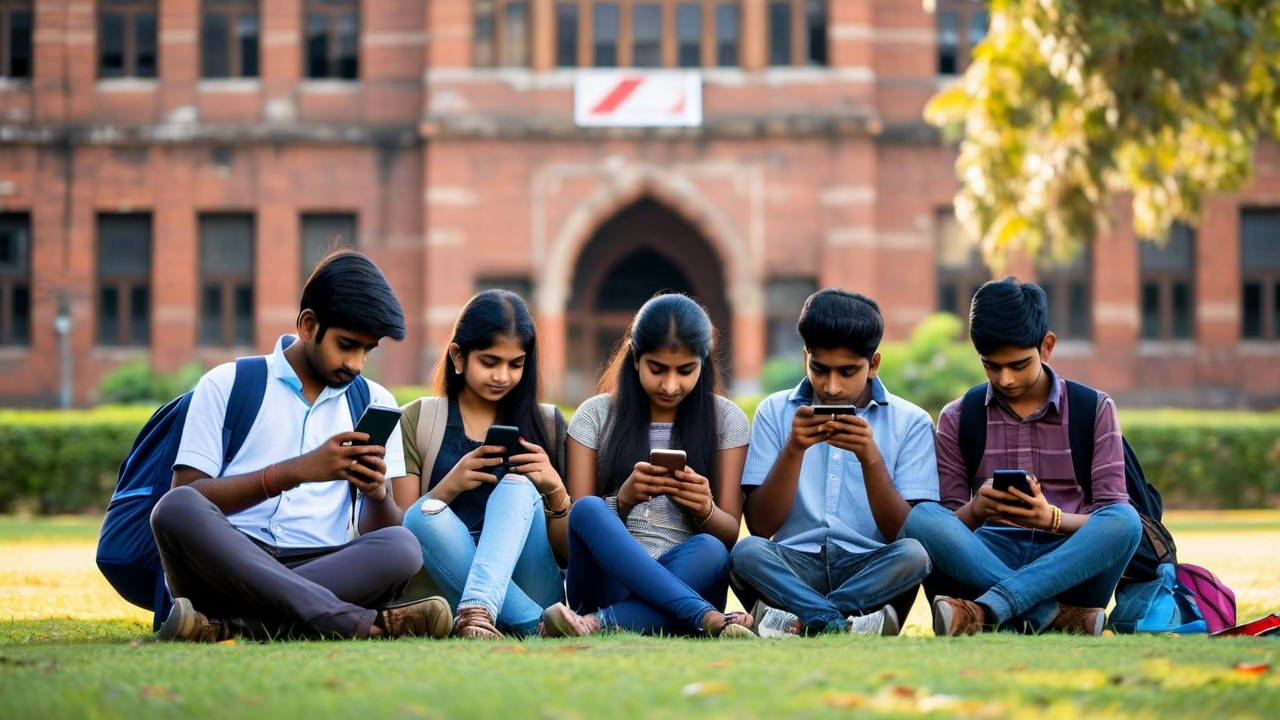
None of this is happening in a vacuum. India has one of the largest and youngest social media populations on Earth, and platforms like Instagram and YouTube have become the default venue for political venting that once might have stayed confined to tea stalls and college canteens. When a minister exits under pressure, the reaction isn’t a press conference — it’s a flood of reels, remixes and jokes, amplified instantly to millions.
Governments everywhere have struggled with how to respond to that kind of instant, decentralized mockery, but India’s response has increasingly leaned on the machinery of law enforcement rather than public communication. Booking an influencer sends an unmistakable signal to millions of other potential critics: your video could be next. Whether that chills genuine dissent or simply pushes it into more coded, harder-to-police forms of expression is the open question hanging over every one of these cases.
There’s also a generational subtext that’s hard to miss. The people posting these reels are largely young, digitally fluent and unbothered by the formalities that once governed political criticism in India. The people deciding whether those reels are “abusive” are, for the most part, a generation older and operating within a legal and institutional framework built for a slower media environment. That mismatch is arguably the real engine driving these stories, case after case, week after week.
What Comes Next
Expect more of this, not less. As long as ministers keep resigning or facing pressure amid public controversy, and as long as young Indians keep treating those moments as content, the friction between online mockery and offline legal consequence will keep generating headlines. The Free Press Journal, Tribune India and Daily Pioneer all covering the same Madhya Pradesh case within a tight window suggests national appetite for this story is real and growing, not a one-off.
The bigger test will be whether India’s courts, which have in the past pushed back on overly broad readings of laws used to police online speech, step in to draw clearer boundaries. Until then, the pattern looks set to repeat: a resignation, a wave of celebratory memes, and somewhere down the line, a knock on someone’s door.
Sources
- MP Social Media Influencer Booked Over Abusive Reel Against Former Education Minister Dharmendra Pradhan — freepressjournal.in
- MP social media influencer booked over abusive reel against ex – Education Minister Pradhan — tribuneindia.com
- MP social media influencer booked over abusive reel against ex – minister Pradhan — dailypioneer.com
- Indian youths celebrate Minister exit , demand more reforms — dailypost.ng
- Delhi Police Crack Down on Abusive Posts Against PM Modi After CJP Protest Ends — oneindia.com
- Youth have always questioned authority , says RSS chief Mohan Bhagwat — timesofindia.indiatimes.com
- Delhi Police cracks down on anti – Modi posts after protests — rediff.com
- Teachers key to protecting students from social media misinformation : Adityanath — hindustantimes.com
- Yogi Adityanath Urges Teachers to Help Students Fight Misinformation — jagranjosh.com






Leave a Reply