
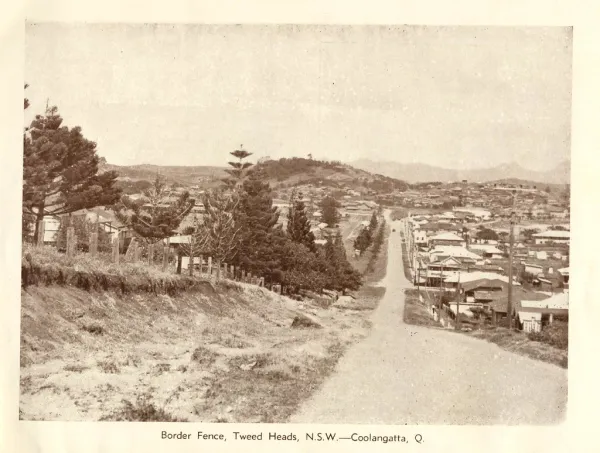
There is a six-meter fence topped with razor wire on the edge of Africa, and on any given week it can tell you more about global power politics than a dozen summits. Ceuta, the tiny Spanish enclave wedged into Morocco’s northern coast, has spent years absorbing waves of migrants who scale, swim, or simply walk past it whenever Rabat decides to look the other way. Now a fresh round of reporting is asking a sharper question: is this really just a migration story, or is Ceuta actually where Spain, Morocco, Israel and the United States are quietly testing each other’s limits?
The Jerusalem Post recently framed Ceuta as a literal convergence point for all four countries’ interests, and it’s not hard to see why. What looks like a local border-control headache is tangled up with a decades-old territorial dispute, a 2020 diplomatic bargain brokered by Washington, and Spain’s increasingly awkward position inside the European Union’s migration architecture.
A Fence That Moves With Politics, Not Geography
Ceuta and its sister enclave Melilla are relics of empire — Spanish territory on the African mainland, claimed by Morocco but held onto by Madrid since long before either country had its current borders. For most of the year, the fence functions like any hardened frontier. But it has a strange habit of becoming porous exactly when Rabat is angry with Madrid, and impenetrable again once relations warm up. That pattern is central to what the Times of India describes as the “geopolitics of illegal migration” running through the enclave: migration flows here aren’t simply a humanitarian overflow, they’re a pressure valve Morocco can open or shut almost at will.
The Times of India’s reporting goes further, raising the question of whether the United States and Israel have their own stake in how that valve gets used — a claim that remains speculative and unconfirmed, but one that reflects how entangled the region’s alliances have become. Even if the direct involvement of Washington or Jerusalem in any single migration surge can’t be verified, the deeper structural link between these four countries is very real, and it has a name: Western Sahara.
The Deal That Rewired North African Diplomacy
In late 2020, the outgoing Trump administration recognized Morocco’s sovereignty over Western Sahara, the disputed territory Morocco has controlled for decades against the wishes of the Sahrawi independence movement and, for years, most of the international community. In exchange, Morocco agreed to normalize relations with Israel, joining the wave of Gulf and African states signing on to the Abraham Accords. It was a classic three-way trade: Morocco got the recognition it had sought for a generation, Israel got another Arab partner, and the U.S. got a diplomatic win it could tout as proof the Accords were still expanding.
Morocco World News’s coverage of Trump’s recent Throne Day message to King Mohammed VI is a reminder that this bargain is still very much alive as an active alliance, not a one-off gesture. Throne Day messages are largely ceremonial, but the outlet frames this one as reinforcing the durability of U.S.-Morocco ties years after the original deal — ties built explicitly on the Western Sahara-for-Israel-recognition swap. That’s the thread connecting a royal anniversary message to a border fence six thousand kilometers away: Washington’s stake in Morocco’s stability, and Morocco’s stake in keeping Washington happy, both run through the same 2020 handshake.
Spain, Stuck Holding the Fence
Spain never signed that deal, but it lives with its consequences daily. Madrid has spent years trying to balance a working relationship with Rabat — crucial for trade, counterterrorism cooperation, and fisheries — against the reality that Morocco holds genuine leverage over Spanish territory. The most vivid example came in 2021, when thousands crossed into Ceuta in a matter of days after a diplomatic row between the two governments, an episode widely understood at the time as Morocco demonstrating exactly how much control it retains over the border when it wants to send a message.
That dynamic hasn’t gone away. Spain also has to answer to the European Union, which has its own asylum rules, its own patience limits, and its own uneasy relationship with outsourcing border enforcement to North African governments. Every time Ceuta becomes a flashpoint, it forces Brussels to confront an uncomfortable truth: the EU’s southern border security increasingly depends on the goodwill of a country pursuing its own agenda over a territory the EU itself doesn’t fully recognize as Moroccan.
Why This Keeps Mattering
None of this is abstract for the people actually crossing that fence, many of them minors, many fleeing conditions with little connection to any of the diplomatic maneuvering described above. But the machinery around them is unmistakably geopolitical. Morocco’s ability to modulate migration pressure gives it outsized influence over Spain and, by extension, the EU. Its Western Sahara arrangement with Washington gives it a powerful patron willing to overlook plenty in the name of Abraham Accords continuity. And Israel’s normalized relationship with Rabat means Jerusalem now has a genuine interest in Morocco’s internal stability and its regional standing — which is presumably part of why the Jerusalem Post is paying close attention to a fence most of the world only notices when the numbers spike.
What happens next is worth watching closely. If Washington under Trump continues to lean into the Morocco relationship as a showcase Abraham Accords success — as the Throne Day message suggests it intends to — Rabat’s leverage over Madrid and Brussels likely grows rather than shrinks. Spain, meanwhile, has few good options: it can’t easily contest Morocco’s sovereignty claims without risking exactly the kind of border pressure it’s trying to avoid, and it can’t fully outsource the problem to the EU without ceding even more control over its own frontier. Ceuta, in other words, isn’t a side story to the bigger diplomatic picture. Increasingly, it looks like the place where that picture gets tested.
Sources
- Ceuta : The border where Spain , Morocco , Israel , and the United States converge — jpost.com
- US , Israel behind Cueta crisis ? The geopolitics of illegal migration from Morocco to Spain — timesofindia.indiatimes.com
- How Trump Throne Day Message Reinforces Morocco – US Ties — moroccoworldnews.com









Leave a Reply