
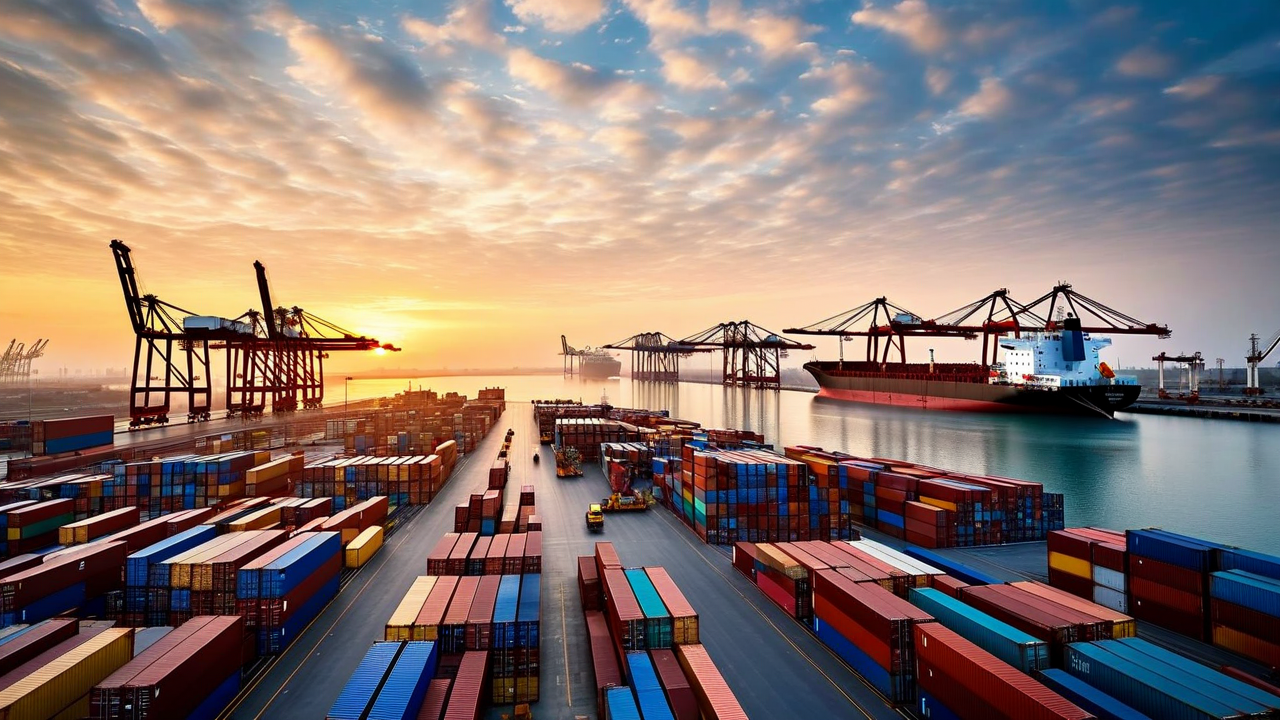
A single vote in the U.S. Senate has just rattled two of the world’s biggest economies. According to a report from livemint.com, the Senate has cleared a bill that would sanction Russia and, crucially, the countries still buying its oil and gas in bulk — with India and China now bracing for tariffs that could hit a staggering 100 percent on their exports to the United States. If that number sounds almost too large to be real, that’s the point. This isn’t a subtle policy tweak. It’s a sledgehammer aimed at the financial lifelines keeping Moscow’s war machine running, and New Delhi and Beijing happen to be standing right where it’s about to land.
Why Russia’s Buyers Are in the Crosshairs
Since the invasion of Ukraine, Russia has leaned hard on countries willing to keep buying its crude and refined products at discounted rates, softening the blow of Western sanctions and price caps. India and China have been the biggest beneficiaries of that arrangement, scooping up cheaper barrels while Western buyers largely stepped back. Washington has periodically grumbled about this workaround, but the bill described by livemint.com marks an escalation: rather than just targeting Russian entities directly, it takes aim at the customers keeping that trade alive. The logic is blunt — if you can’t stop the seller, squeeze the buyer until the deal stops being worth it.
That’s a fundamentally different kind of pressure than sanctions on Russian banks or oil majors. Those measures try to choke supply. This one tries to choke demand, and demand from economies the size of India and China is not something that evaporates quietly.
The 100 Percent Number and What It Actually Means
Tariffs of 100 percent on goods entering the U.S. would functionally double the price of anything caught in the net, effectively pricing many exports out of the American market entirely. For India, which has spent years courting Washington as a strategic and trade partner, that would be a jarring reversal. For China, already navigating a fraught trade relationship with the U.S. that has swung between tense truces and tariff escalations for years, it would be another log on a fire that never fully goes out. As livemint.com’s reporting notes, both countries are watching this bill nervously precisely because it doesn’t distinguish neatly between energy purchases and everything else two massive economies trade with America — semiconductors, textiles, pharmaceuticals, machinery, the works.
It’s worth being honest about what remains uncertain here. A Senate vote is not the same as a signed law. Bills of this magnitude typically require reconciliation with the House, presidential sign-off, and — in practice — a long runway of diplomatic maneuvering before anything resembling a 100 percent tariff actually shows up on a customs form. Threats like this have a way of becoming leverage long before they become policy. But leverage only works if the other side believes you might actually pull the trigger, and that’s exactly the psychological pressure now sitting on desks in New Delhi and Beijing.
India’s Awkward Position
India has built a careful, if occasionally contradictory, foreign policy around not choosing sides. It buys discounted Russian oil to keep domestic energy costs manageable for over a billion people, while simultaneously deepening defense and technology ties with the United States and participating in groupings like the Quad that are implicitly about balancing China. That balancing act has worked for years because Washington mostly tolerated it as the cost of keeping India close. A bill that threatens punishing tariffs over Russian energy purchases changes the math. It forces a question India has managed to avoid answering cleanly: when push comes to shove, does the relationship with Washington outweigh the economic logic of cheap Russian crude?
There’s also a domestic angle. Energy affordability is a politically sensitive issue in India, and any disruption to discounted crude supplies — whether from sanctions pressure or from India preemptively backing away to avoid tariffs — could ripple into fuel prices at a moment when the government can ill afford that kind of headache.
China’s Familiar, Exhausting Déjà Vu
For Beijing, this is less a new crisis than a returning one. Trade tensions with Washington have oscillated for years between outright confrontation and uneasy ceasefires, and Chinese officials have grown accustomed to treating American tariff threats as a recurring negotiating tactic rather than a bolt from the blue. Still, layering a Russia-sanctions dimension onto an already complicated trade relationship adds a geopolitical wrinkle that’s harder to negotiate away with the usual tools — tariff exemptions, purchase agreements, incremental concessions. This bill ties trade policy directly to a war China has tried to stay rhetorically neutral on while quietly benefiting from cheap Russian energy and deepening ties with Moscow. That makes the usual playbook of transactional de-escalation harder to run.
What Happens Next
The immediate question is procedural: does this bill survive the rest of the legislative process intact, watered down, or at all? Sanctions legislation aimed at major trading partners tends to attract intense lobbying, and industries on both the American and foreign sides that rely on smooth trade flows will be pushing hard for carve-outs or delays. There’s also the diplomatic track — expect quiet conversations, and probably some not-so-quiet public statements, from New Delhi and Beijing in the coming weeks as they test how firm Washington’s resolve really is.
The bigger picture, though, is what this signals about the next phase of the Russia-Ukraine standoff. Direct sanctions on Moscow have had real but limited effect partly because buyers elsewhere kept the money flowing. Going after those buyers is a recognition that the war of attrition over Russian oil revenue has to widen if the West wants it to actually bite. Whether that strategy works — or simply pushes India and China closer to each other and to Moscow as a bloc with shared grievances against U.S. trade policy — may be the more important story than the tariff number itself. A 100 percent tariff is a threat. What it does to the alignment of three of the world’s largest economies could be the real consequence.







Leave a Reply