
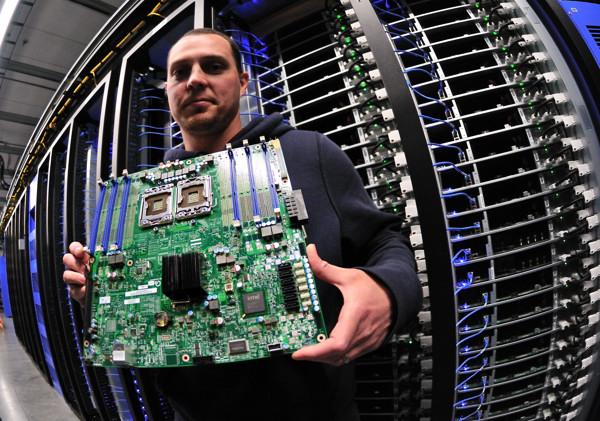
Even the richest company on Earth can’t just buy its way out of a shortage. Apple, sitting on one of the largest cash piles in corporate history, has told investors it could run short on the computing power it needs to build and run its AI systems — a shortfall serious enough to risk delaying products and services, according to wccftech. That single admission is a window into a much bigger story: the global race for AI computing capacity has outrun the world’s ability to supply it, and the ripple effects are showing up everywhere from Cupertino boardrooms to stock exchanges across Asia.
When the Biggest Player Says “We Might Not Have Enough”
Apple has spent years positioning itself as a company that controls its own destiny, designing its own chips and building its own data infrastructure. So when it warns publicly that AI computing power could become a bottleneck, that is not a small signal. Wccftech reported the concern centers on whether Apple can secure enough high-end compute capacity to keep pace with the AI features it has promised across its product lineup. The subtext is unmistakable: if a company with Apple’s balance sheet and supplier leverage is worried about getting enough chips and servers, smaller players are almost certainly feeling the squeeze even harder.
This isn’t just about buying more chips off a shelf. Training and running modern AI models requires enormous clusters of specialized processors, vast amounts of high-bandwidth memory, and data-center capacity that takes years, not months, to build. Demand has simply outpaced the industry’s ability to expand supply, and that mismatch is now a strategic risk for any company betting its future on AI.
The Chipmakers Are Having a Moment
While Apple frets over scarcity, the companies that actually make AI hardware are riding the opposite wave. Yahoo Finance reported that AMD’s stock surged 12.7% as investors piled back into data-center chip bets, a sign that Wall Street sees the AI infrastructure buildout as far from over. Meanwhile, CNBC reported that SK Hynix and Samsung shares roared back as the AI rally reasserted itself, underscoring how central Korean memory-chip makers have become to the entire AI supply chain. These are the companies producing the high-bandwidth memory that AI processors depend on — the same kind of specialized component that makes scaling up so slow and expensive in the first place.
It’s a strange dynamic: the same shortage that worries a company like Apple is precisely what’s making chipmakers like AMD, SK Hynix, and Samsung look like the most valuable real estate in tech. Scarcity, in this case, is somebody else’s windfall.
Asia’s Wild Swings Tell the Real Story
Nowhere has the volatility been more dramatic than in South Korea. The Economic Times reported that the Kospi index rocketed 17% after a massive three-day selloff, a whiplash move that captures just how jittery — and how AI-dependent — markets have become. One day chip stocks are in freefall on fears of overbuilt capacity or slowing orders; the next, they’re roaring back on renewed confidence that AI demand isn’t going anywhere. That kind of swing isn’t normal for a national stock index, and it’s a direct reflection of how much of the Korean economy is now wrapped up in memory chips and AI infrastructure.
Taiwan is telling a quieter but equally striking version of the same story. Asharq Al-Awsat reported that Taiwan’s economy grew by almost 13% on the back of AI demand — a staggering figure for an advanced economy, and one that shows how thoroughly the AI boom has become an engine of national growth, not just a stock-market story. Taiwan’s chip foundries sit at the center of the global AI hardware supply chain, and when demand for AI chips spikes, the entire island’s economic output moves with it.
Why This Isn’t Just a Tech-Sector Story
It’s tempting to file all of this under “tech stocks are volatile,” but the stakes are broader than a few earnings reports. When Apple says its own product roadmap could be delayed by a lack of computing power, that has consequences for consumers waiting on new features, for enterprise customers building on Apple’s platforms, and for the wider ecosystem of developers who depend on predictable release cycles. When South Korea’s benchmark index swings 17% in days, that volatility touches pension funds, currency markets, and investor confidence well beyond the tech sector. And when Taiwan’s GDP growth is being driven so heavily by AI chip demand, that concentration creates its own kind of fragility — a single sector now carries outsized weight in shaping a national economy’s fortunes.
The deeper issue is that AI’s appetite for computing power has become nearly insatiable, and the physical infrastructure to satisfy it — chip fabrication plants, memory production lines, data-center buildouts — simply cannot expand overnight. These are multi-year, multi-billion-dollar projects. Even well-capitalized companies are discovering that money alone doesn’t guarantee capacity when the entire industry is competing for the same limited pool of advanced chips and manufacturing slots.
What Comes Next
Expect the tension between AI ambition and AI capacity to keep defining headlines through the rest of the year. Companies like Apple will likely lean harder on their supplier relationships and possibly recalibrate which AI features ship first and which get delayed. Chipmakers and memory producers, flush with renewed investor enthusiasm after the AMD, SK Hynix, and Samsung rallies reported by Yahoo Finance and CNBC, will face pressure to expand production without overcommitting to capacity that could sit idle if demand ever cools. And markets like South Korea’s Kospi, still shaking off the aftershocks of its recent selloff-and-surge cycle reported by the Economic Times, will remain a bellwether for how confident — or nervous — investors are about the durability of the AI boom.
The bigger question hanging over all of it is whether the world is building enough real capacity to match the promises being made about AI’s future, or whether today’s scramble for compute is a preview of shortages, delays, and price spikes still to come. Apple’s warning suggests even the companies best positioned to weather that uncertainty aren’t entirely sure of the answer.
Sources
- Apple Warns It Could Run Short on AI Computing Power , Risking Delays to Products and Services — wccftech.com
- AMD Stock Soars 12 . 7 % as AI Rally Revives Data – Center Bets — finance.yahoo.com
- SK Hynix , Samsung stocks : AI rally roars back — cnbc.com
- From shock to rally – South Korea Kospi surges – The AI surge splits Asia in two — bankingnews.gr
- South Korea Kospi rockets 17 % after massive 3 – day selloff . What behind the surge ? — economictimes.indiatimes.com
- Taiwan Economy Grows by Almost 13 Percent on AI Demand — english.aawsat.com






Leave a Reply